
When preparing for surgery, most of our attention goes toward the physical recovery: swelling, pain medication, wound care, and how long we’ll need to rest.
But what about preparing mentally?
Maybe you’re worried about waking up in pain, feeling helpless while recovering, or whether your anxiety could make healing more difficult. All very reasonable concerns, particularly when you’ve chosen to undergo plastic surgery.
Research now increasingly suggests that psychological preparation may influence certain aspects of recovery, including pain, anxiety, and emotional wellbeing.
This, however, doesn’t mean you can think your way into faster healing. But how you prepare emotionally may affect how you experience and cope with recovery.
What Is Pre-Op Psychology Before Surgery, and Why Does It Matter?
Pre-op psychology before surgery focuses on emotional readiness, expectations, anxiety, and coping strategies. Psychological preparation can help patients feel more equipped to manage discomfort, uncertainty, and temporary physical limitations during recovery.
In surgical research, structured mental preparation is called psychological prehabilitation.
The study involved cognitive behavioural therapy, supportive psychotherapy, and other evidence-based psychological interventions. Although the research did not specifically examine hypnotherapy, it supports the broader role of psychological preparation in surgical recovery.
Separate studies have investigated the potential benefits of clinical hypnosis for pain and anxiety.
Therefore, the aim is to prepare patients for more than the physical procedure, including:
Managing fears about pain and recovery.
Developing realistic expectations.
Coping with temporary dependence on others.
Recognizing unhelpful thought patterns.
Preparing for emotional changes after surgery.
For plastic surgery patients, this can be particularly relevant. You might feel confident about your decision but still find the reality of swelling, bruising, discomfort, or limited independence difficult to cope with.
Knowing what to expect physically doesn’t always mean feeling prepared emotionally.
Can Psychological Preparation Actually Improve Recovery and Reduce Pain?
Yes, while research is still developing, early findings are promising. Medical researchers are increasingly exploring how psychological wellbeing, alongside physical preparation, may influence surgical recovery and pain management.
A 2025 systematic review and meta-analysis published in Annals of Surgery, led by UCLA researchers, examined 20 randomised controlled trials involving 2,376 surgical patients.
The researchers found that patients who received psychological preparation before surgery experienced:
Shorter hospital stays: An average of 1.62 fewer days in hospital.
Less postoperative pain: Pain scores were lower by an average of 3.52 points across the measures analysed. This is a combined research finding, not a guaranteed reduction on an individual’s 0-to-10 pain scale.
Improved emotional wellbeing: Lower levels of anxiety and depression following surgery.
The interventions studied included cognitive behavioural therapy, supportive psychotherapy, and acceptance and commitment therapy, rather than hypnotherapy specifically.
Supporting this broader approach, a 2025 review published in The BMJ examined 186 randomised controlled trials involving more than 15,000 patients. Researchers investigated how preparing patients through exercise, nutrition, cognitive training, and psychological support might improve surgical recovery.
The review found that certain prehabilitation programmes were associated with fewer complications and shorter hospital stays. Programmes combining exercise, nutrition, and psychosocial support also showed potential improvements in physical recovery and quality of life.
What I find encouraging about these studies is the recognition that preparing for surgery may involve more than preparing the body alone. Researchers are increasingly examining how physical, nutritional, and psychological preparation can work alongside conventional medical care.
Does Stress Slow Down Wound Healing After Surgery?
Stress can influence the body’s healing processes, particularly through its effects on hormones, immune activity, and inflammation. However, while researchers have identified a connection between stress and tissue repair, the evidence doesn’t establish that feeling anxious before surgery will necessarily delay your recovery.
When we’re stressed, our nervous system releases hormones such as adrenaline and cortisol. While this is a normal response, prolonged stress can affect sleep, immune function, and how the body regulates inflammation.
A study published in Archives of General Psychiatry found that people experiencing higher stress levels had changes in inflammatory signalling at experimental wound sites, suggesting a way psychological stress could influence tissue repair.
But there’s an important nuance between identifying these biological effects and establishing whether anxiety actually leads to slower healing after surgery.
In fact, a 2025 systematic review and meta-analysis found no statistically significant overall association between anxiety and delayed wound healing. This suggests the relationship is more complex, and further research is needed to understand how different types of stress affect recovery.
The important takeaway is that feeling anxious before surgery doesn’t mean you’re compromising your recovery.
Your healing depends on many factors, including your overall health, surgical procedure, and postoperative care.
Rather than viewing stress management as something you must get right to heal properly, I encourage clients to see it as another way of supporting their comfort, emotional well-being, and overall recovery experience.
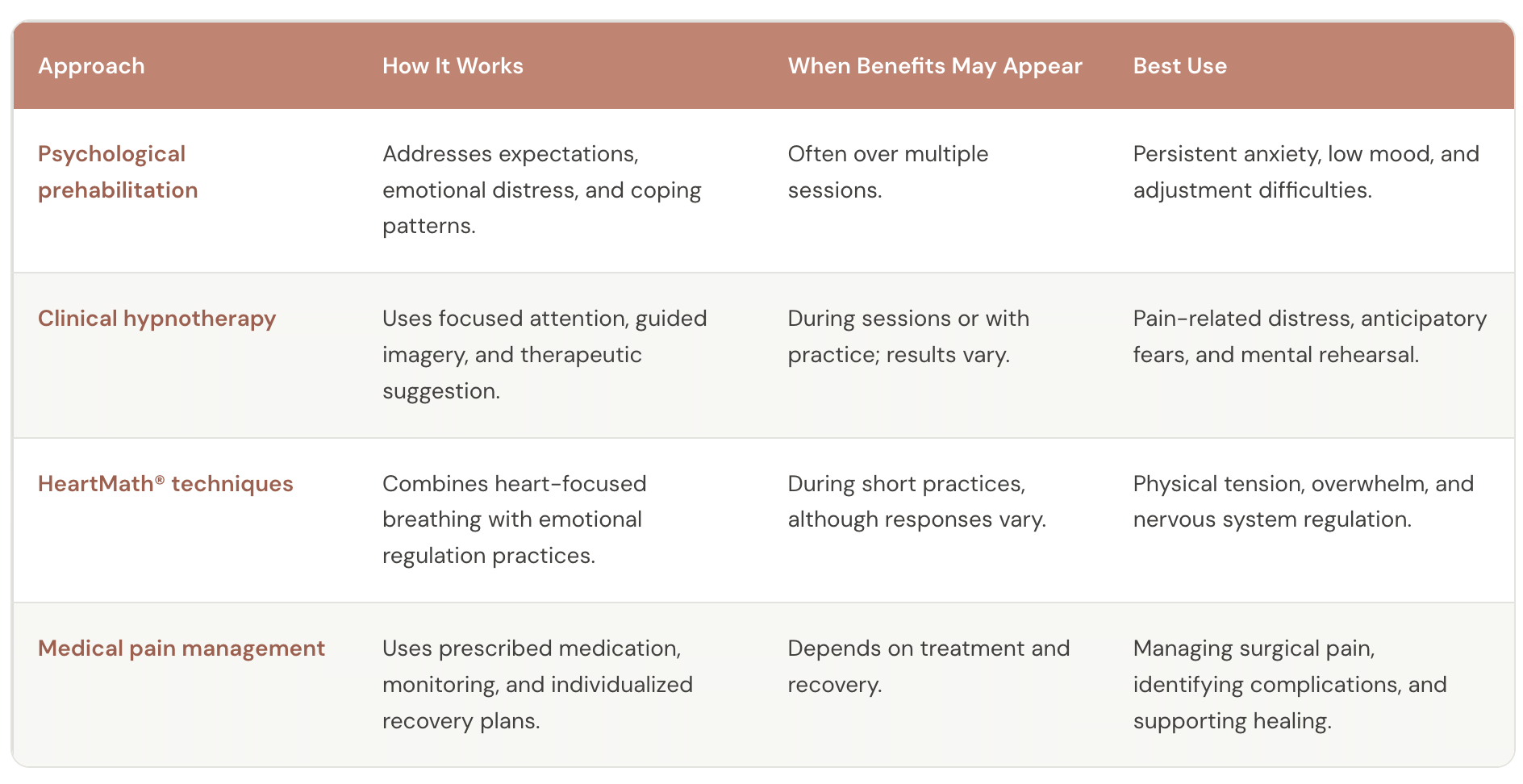
Which Pre-Op Psychology and Pain-Management Approaches Can Support Recovery?
Different approaches support different aspects of surgical recovery. Psychological therapy can address emotional distress, clinical hypnotherapy may help with pain perception and anticipatory fear, HeartMath® supports emotional regulation, and medical care remains essential for managing pain and physical healing.
| Approach | How It Works | When Benefits May Appear | Best Use |
|---|---|---|---|
| Psychological prehabilitation | Addresses expectations, emotional distress, and coping patterns. | Often over multiple sessions. | Persistent anxiety, low mood, and adjustment difficulties. |
| Clinical hypnotherapy | Uses focused attention, guided imagery, and therapeutic suggestion. | During sessions or with practice; results vary. | Pain-related distress, anticipatory fears, and mental rehearsal. |
| HeartMath® techniques | Combines heart-focused breathing with emotional regulation practices. | During short practices, although responses vary. | Physical tension, overwhelm, and nervous system regulation. |
| Medical pain management | Uses prescribed medication, monitoring, and individualized recovery plans. | Depends on treatment and recovery. | Managing surgical pain, identifying complications, and supporting healing. |
These approaches work best when their roles are clearly understood.
At The Integrated Self Clinic, I use clinical hypnotherapy and HeartMath® to support the emotional and nervous system aspects of surgery. Medical treatment and physical healing remain the responsibility of your surgical team.
Can Clinical Hypnotherapy Help With Pain After Surgery?
Clinical hypnotherapy may help reduce pain-related distress and perceived pain intensity through focused attention, therapeutic suggestion, and mental rehearsal. While growing research suggests potential benefits, results vary, and hypnosis should never replace prescribed postoperative pain treatment.
Pain isn’t determined only by signals from injured tissue.
Our attention, expectations, previous experiences, and emotional state can influence how the nervous system interprets those signals. Meaning the experience of pain has both physiological and psychological layers.
A 2025 meta-analysis involving 1,250 patients found that hypnosis was associated with reductions in procedural anxiety and pain, reporting standardized effects of −0.43 and −0.35.
A 2026 review examining hypnotherapy in plastic surgery recovery also reported promising findings involving pain and analgesic requirements, although the evidence remains preliminary.
In my clinical hypnotherapy practice at The Integrated Self Clinic, I focus on how clients anticipate and respond to discomfort.
For example, someone might associate every unfamiliar sensation with danger, making it difficult to relax even when their recovery is progressing as expected.
Through guided imagery and therapeutic suggestion, we can practise responding with less automatic fear while remaining attentive to symptoms that require medical assessment.
The goal isn’t to eliminate pain. It’s to help reduce the distress that can accompany it.
How Can I Prepare My Mind and Body for Surgical Recovery?
Your Mind-Body Preparation Toolkit
Three practical ways to prepare for the emotional and physical experience of surgical recovery.
HeartMath® Breathing
For physical tension and overwhelm
- Find a comfortable, supported position.
- Bring your attention to the area around your heart.
- Breathe gently, imagining your breath flowing through that area.
- Recall a feeling of care, appreciation, or comfort.
- Continue for two minutes, noticing whether your body feels less tense.
Guided Imagery
For fear of pain and recovery
- Close your eyes if comfortable and allow your breathing to settle.
- Imagine gradually waking after your procedure.
- Picture yourself asking your recovery team for support.
- Imagine resting at home, accepting help, and following your care plan.
- Practise responding to temporary discomfort with patience.
Medical Preparation
For pain-related uncertainty
- Ask what type and level of pain is expected after your procedure.
- Clarify how pain will be managed in hospital and at home.
- Discuss what to do if your prescribed medication isn't helping.
- Ask which symptoms require urgent medical attention.
- Share any concerns about pain medication with your surgical team.
Preparation isn't about controlling every outcome, rather having more ways avaliable to you to respond.
Can Anxiety Before Surgery Increase Pain Medication Requirements?
Higher preoperative anxiety has been associated with increased anesthetic and postoperative analgesic requirements in some studies. However, this doesn’t mean every anxious patient needs more medication or experiences greater pain.
A 2025 systematic review and meta-analysis found associations between higher anxiety and increased anesthetic and analgesic requirements.
Interestingly, it did not find a significant overall association between anxiety and postoperative pain scores.
This study suggests that medication requirements and reported pain intensity are related but with distinct outcomes.
It also doesn’t establish that reducing anxiety through hypnotherapy will directly reduce medication needs.
If pain management concerns you, speak with your medical team rather than placing pressure on yourself to cope without medication.
How Can I Prepare Emotionally for Recovery After Plastic Surgery?
Emotional preparation for plastic surgery involves recognising that swelling, bruising, restricted movement, and temporary changes in appearance may feel different from what you imagined. Realistic expectations and emotional support can help you respond to these changes without immediately assuming something has gone wrong.
For me, this aspect of recovery deserves more attention.
You may have chosen surgery because you want a particular physical change. Yet the first version of that change you see may involve swelling, dressings, or bruising.
You might also feel frustrated by needing help with everyday activities.
The brain maintains internal representations of the body, including what’s known as the body schema. Changes in sensation, appearance, and movement can sometimes require adjustment.
For some people, that adjustment is straightforward. For others, it can bring unexpected vulnerability, sadness, or impatience.
In my practice, I help clients explore what it means to temporarily lose independence, encounter unfamiliar changes in appearance, or feel less in control of their recovery.
When Should I Start Mental Preparation Before Surgery?
Mental preparation can begin several weeks before surgery, giving you time to identify concerns and practise coping techniques. However, even a shorter preparation period may help you clarify expectations and communicate your needs.
Several weeks before surgery: Explore your concerns about pain, anesthesia, appearance, or dependence on others. Begin practising regulation techniques.
During the final week: Focus on medical instructions, practical arrangements, and a familiar calming routine rather than repeatedly researching possible complications.
During early recovery: Prioritise medical guidance, rest, communication, and adapting emotionally to temporary limitations.
The number of sessions is less important. The focus is on having support and coping strategies appropriate to your circumstances.
Frequently Asked Questions
Is Psychological Preparation Necessary Before Elective Plastic Surgery?
Not everyone needs formal psychological preparation before elective plastic surgery. Many people cope well with surgery without additional support. However, preparing for anxiety, discomfort, temporary limitations, and changes in appearance may be helpful. Clinical hypnotherapy is one optional complementary approach, but it does not replace a formal psychological assessment if your surgeon requires one.
Can Mental Preparation Help Even if I’m Not Anxious About Surgery?
Yes. Mental preparation isn’t only about anxiety. It can help you develop realistic expectations, consider how you’ll manage discomfort, and prepare for temporary changes in independence or appearance. Research suggests some structured psychological preparation programs may improve postoperative outcomes, although benefits vary. Feeling confident about surgery doesn’t mean you can’t benefit from preparing emotionally for recovery.
Can Hypnotherapy Reduce the Need for Pain Medication After Surgery?
Some studies have reported reduced analgesic requirements with hypnosis, but results are inconsistent and individual benefits cannot be guaranteed. Clinical hypnotherapy may help with relaxation, pain perception, and emotional coping. It is not a replacement for prescribed medication. Your surgeon or anesthesiologist should guide pain management, and you should never change medication without medical approval.
Mentally prepare for your surgery too
I'm Deb Chiou, a Registered Clinical Hypnotherapist and Certified HeartMath® Coach at The Integrated Self Clinic. I work one-to-one with clients preparing for and recovering from plastic surgery, helping them address anticipatory anxiety, pain-related fears, nervous system responses, and the emotional adjustment that can accompany recovery.
If you're considering support, you're welcome to book a free 30-minute consultation directly with me.
Book nowIn-person sessions in Mexico City · Online worldwide
Want to understand the process first? Explore Pre Op Hypnotherapy Support